I. Material Characteristics and Selection
Diversity of materials: A wide variety of materials are used for aviation parts, including aluminum alloys, titanium alloys, superalloys and composite materials. These materials possess different physical and chemical properties, which pose different requirements for processing techniques and equipment.
Difficult-to-machine nature of materials: Some materials, such as titanium alloys and superalloys, are characterized by high hardness, large cutting forces and poor thermal conductivity. As a result, during the machining process, the cutting tools wear out quickly and the cutting temperature is high, which increases the difficulty of machining.
II. Complex Geometric Shapes
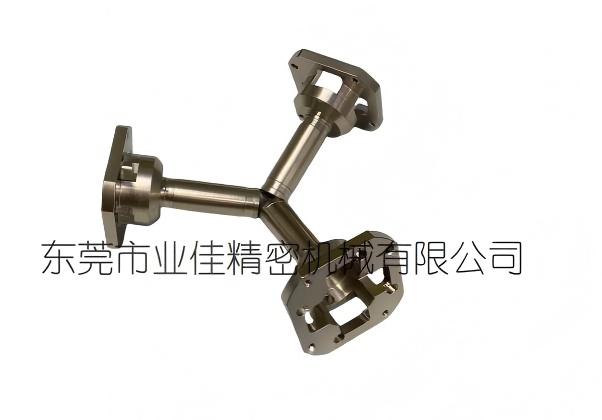
High precision requirements: Aviation parts usually have complex geometric shapes and strict dimensional precision requirements. For example, the key components of aircraft engines, such as compressors, combustion chambers and turbines, mostly have special-shaped annular structures. They are characterized by poor rigidity, high precision and complex profiles, making the machining process rather difficult.
Large-sized parts: The structural parts of aircraft fuselages, such as beams, frames, ribs and panels, are large in size. They have large external contour dimensions and belong to the integral frame structure with thin walls and multiple cavities. A large amount of material needs to be removed by mechanical cutting, and high surface quality is required.
III. Challenges in Machining Technology
Control of cutting force and temperature: When machining difficult-to-machine materials, how to effectively control the cutting force and cutting temperature is a key technical problem. Excessively high cutting force and temperature will not only lead to intensified tool wear but also may cause part deformation and deterioration of surface quality.
Tool selection and wear: It is crucial to select appropriate tools according to different materials and machining requirements. Meanwhile, the issue of tool wear also requires key attention during the machining process. Excessive tool wear will affect the machining precision and surface quality and may even result in machining failure.
IV. Quality Control and Inspection
Strict quality control standards: Aviation parts have extremely high requirements for quality. Strict quality control and inspection procedures are needed to ensure that each part meets the design requirements. This includes multiple links such as raw material inspection, machining process monitoring and finished product inspection.
High-precision inspection equipment: To achieve high-precision quality control and inspection, high-precision measuring instruments and equipment, such as high-precision measuring devices and microscopes, are required. These devices need to be calibrated and maintained regularly to ensure their precision and reliability.
V. Technological Innovation and Optimization
Application of new technologies: With the progress of science and technology and the development of processes, more and more new technologies are being applied in the field of aviation part machining. For example, the application of numerical control machining technology, laser machining technology, additive manufacturing technology, etc., has provided new ideas and methods for solving traditional machining problems.
Process optimization: Through the optimization of machining processes, the machining efficiency and part quality can be improved. For example, optimizing cutting parameters, improving tool design and adopting new cooling methods can all reduce the machining difficulty and improve the machining effect to a certain extent.